
_1.webp)


Following the publication of the GCSE results by Ofqual, a number of trends emerged regarding boys’ performance and gender attainment gaps.
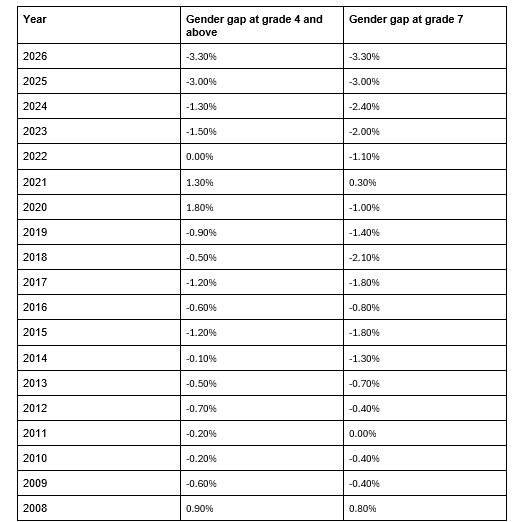
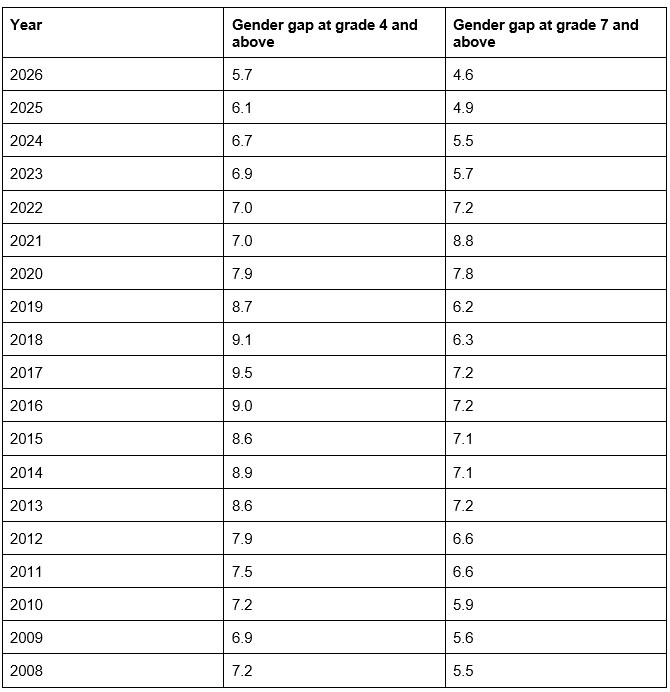
The figures show the persistence of the gender attainment gap between boys and girls which has been in place from the first published figures in 2008. While it has narrowed recently (5.7 percentage points in 2026 for grade 4 and above, and 4.6% at grade 7 and above), the current rate of change means it will still take 14-15 years to close. We simply cannot wait that long.
The other concern is the decline in boys' pass rates for English Language (the lowest pass rate since 2017 at grade 4 and above) and mathematics (the lowest at grade 4 and above since 2013). Six years on from the pandemic, standard pass rates are lower than the pre-pandemic period for boys and girls. This drop in attainment must be understood and addressed.
The fact that 35.8% of boys’ grades including 46.3% in English language and 41.1% in maths do not receive the necessary Grade 4, means many will find it difficult to progress in careers or education, fuelling the NEET crisis.
In response to the continuing underperformance of boys, the Centre for Policy Research on Men and Boys is hosting the first-ever Boys’ Education Commission to understand the reasons and provide the solutions. The Commission has just launched its call for evidence.
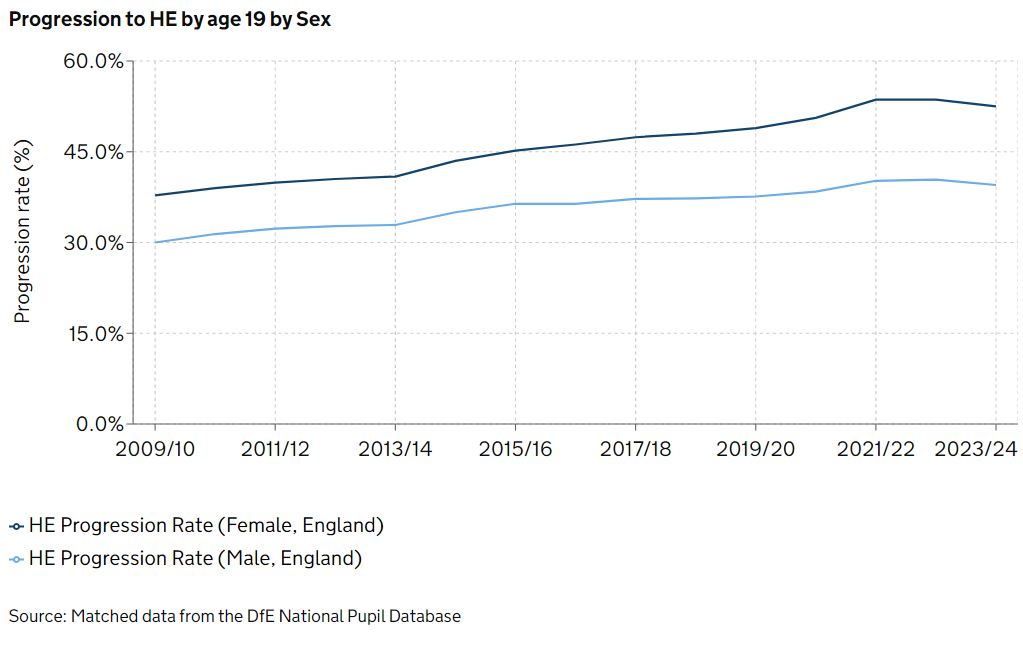
The overall gender attainment gap follows a longstanding trend, where boys start school behind girls and never catch up. This pattern was seen in last week’s A level and technical education results with one outcome being that 26,000 fewer 18-year-old English boys had been accepted by universities than their female peers.
We do, of course, recognise that the gap has narrowed which is due to girls' grades dropping, while boys' results have risen very slightly
GCSEs are a more direct gateway into employment and apprenticeships (as well as into Level 3 education), and the majority of employers (DfE Employer Skills Survey 2024) regard GCSE English and maths at grades 4–9 as either “critical” or “significant” when recruiting. This therefore has huge significance for the work prospects of young men. The overall male NEET figures are at a 14-year high (257,000 are unemployed and 297,000 are economically inactive/not looking for work) - that is 14.4% of males in this 16-24 age group.
Overall Results and Gender Gap
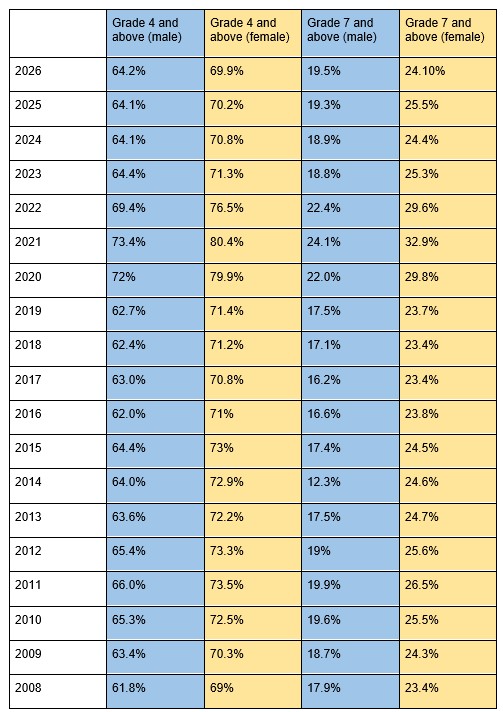
64.2% of GCSEs entered by boys were marked grade 4 or above (69.9% girls).
19.5% of boys’ entries achieved 7+ grades (24.1% girls).
Taking core comparative dates, the pass rate is showing a decline since the pandemic, albeit the figures remain higher than before the pandemic.
Figure 1: GCSE all grades (all ages)
The gender gap between boys and girls has been in gradual decline. However, it is still persistent. The current gender gap at grade 4 will take 14 years to close and at grade 7 will take 15 years to close.
Figure 2: Gender gap for all GCSE grades (all ages)
English Language
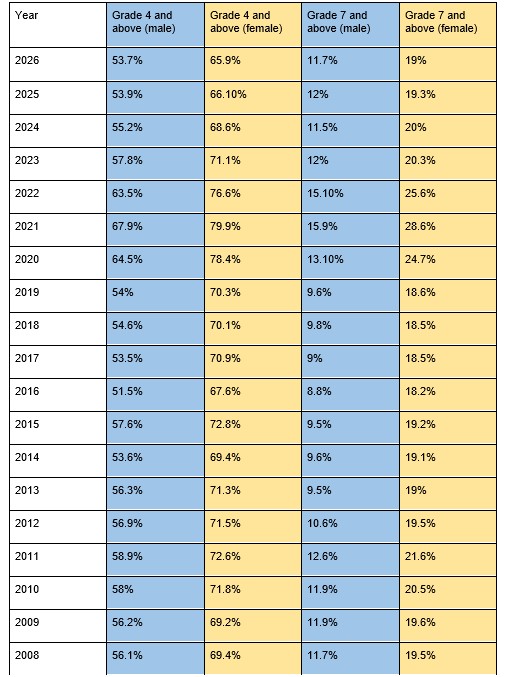
The 2026 figures show that for the sixth year running, male attainment at grade 4 and above (standard pass) for English Language GCSE has dropped. In fact, it is the lowest pass rate since 2017 and lower than the pre-pandemic year of 2019. This drop in attainment must be understood and addressed.
Figure 3: GCSE English Language (All ages)
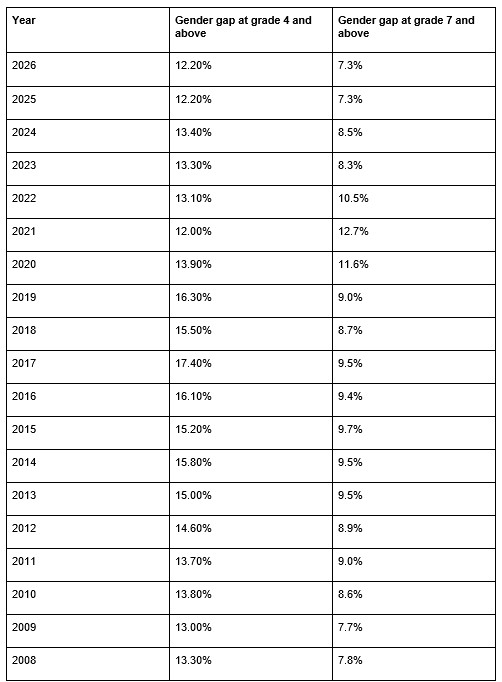
In English Language, the gender gap at grade 4 has not changed in the last year, and remains stagnant at 12.2%. It has also not changed at grade 7, and remains at 7.3%. This stagnation is alarming. It shows that the gap at 11 (SATS) between boys and girls with respect to reading and writing is never closed during secondary school.
Figure 4: Gender gap for GCSE English Language (All ages)
Mathematics
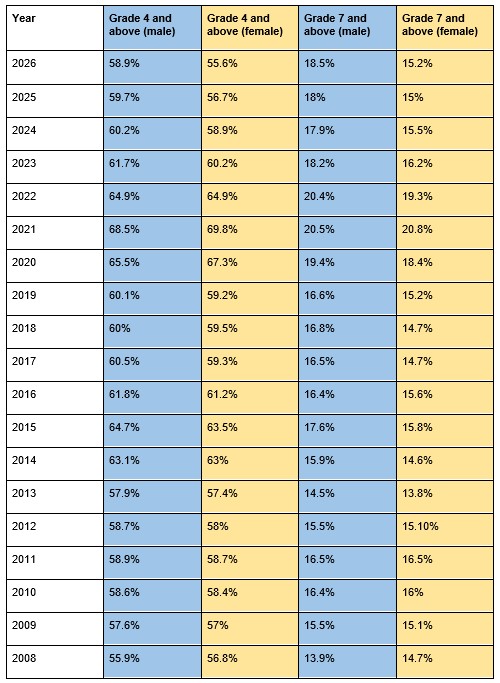
While boys’ performance is better than girls’, both rates at grade 4 and above have been declining for the past 5 years. In fact, for boys, the 2026 grade 4 and above pass rate is the lowest since 2013. Six years on from the pandemic, standard pass rates are lower than the pre-pandemic period for boys and girls.
Both male and female pass rates at grade 7 and above have increased over the last year (the lowest at grade 4 and above since 2013).
Figure 5: GCSE Mathematics (All ages)
The gender gap at mathematics is reversed, with boys being ahead of girls, a pattern seen at SATS
Figure 6: Gender gap for GCSE Mathematics (All ages)