
_1.webp)


A Gender Gap Hidden in Plain Sight
On World Book Day, the Centre for Policy Research on Men and Boys has taken a look at recent literacy data for boys and girls.
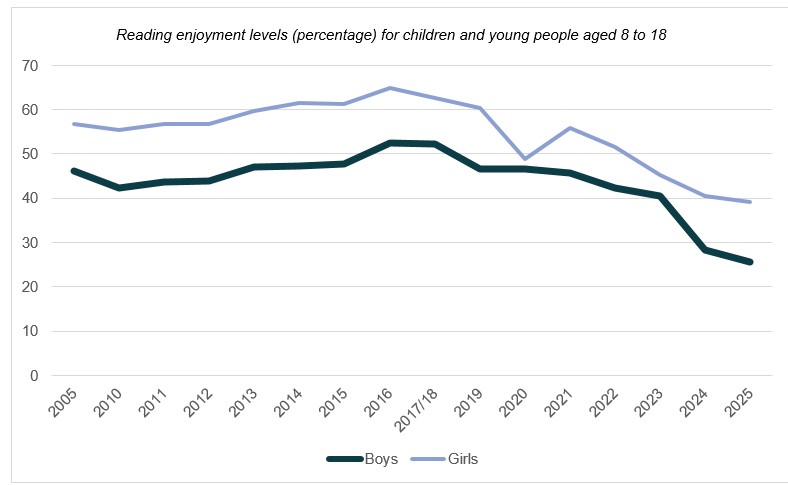
Recent data from the National Literacy Trust shows a persistent and widening gender gap in reading for pleasure — the terms used as a proxy for “enjoying reading”.
● Boys’ reading for pleasure has fallen 36% since 2023 (the 2025 figure is now just 25.7%)
● It has declined 51% since 2016 (the2016 figure was 52.4%)
● Girls consistently report significantly higher rates of enjoyment and daily reading. Despite the scale of decline, there is no coordinated national strategy aimed specifically at closing the boys’ reading gap.
Figure 1: Trend - Decline in Boys’ Reading for Pleasure (Indexed 2016 = 100)
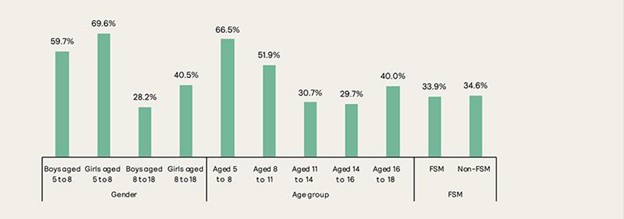
Figure 2: Progression to HE by age 19 by sex
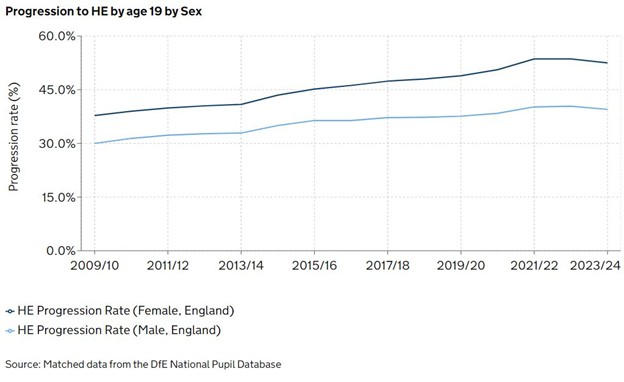
Figure 3: Reading enjoyment levels (percentage) for children and young people aged 8 to 18)
The reading for pleasure gender gap mirrors the wider literacy attainment gap.
Data from the Department for Education consistently shows:
● Girls outperform boys in reading at KS2 and GCSE
● Boys are more likely to fall below expected reading standards
● Lower literacy correlates with disengagement from education
The logic is straightforward: if boys are less able to read fluently and confidently, they are less likely to read voluntarily. Reading becomes effortful rather than enjoyable. The OECD has repeatedly shown literacy is one of the strongest predictors of long-term economic mobility. Therefore closing the reading gap requires systemic reform —not just warm words of encouragement.