
_1.webp)

.jpg)
CPRMB publishes landmark review of boys' education outcomes across high-income countries
The Centre for Policy Research on Men and Boys (CPRMB) has embarked on a major project investigating why education standards have fallen among young people across the developed world. Over the past ten years, average attainment among 15-year-olds across OECD (Organisation for Economic Co-operation and Development) countries has declined in reading, maths and science.
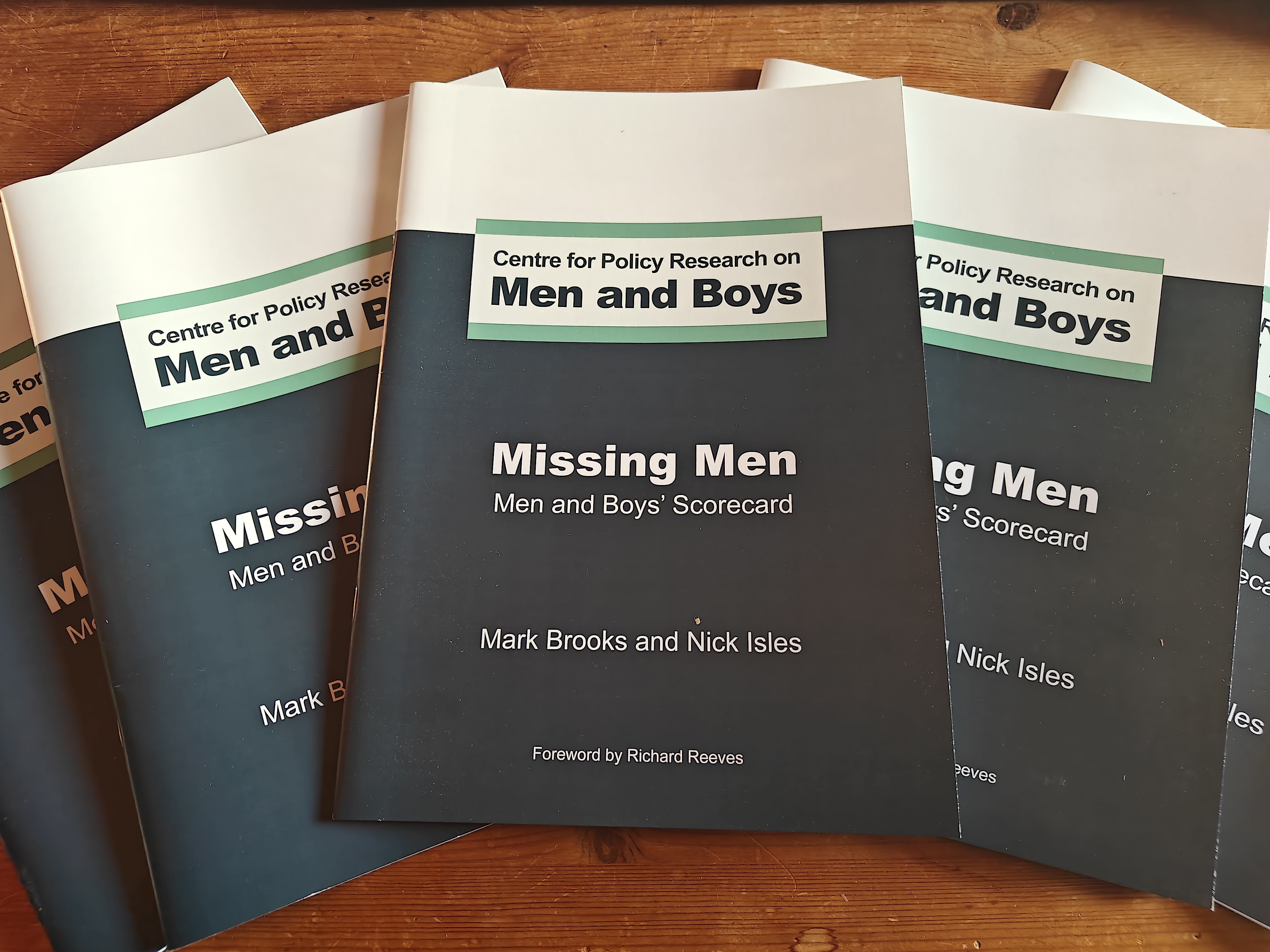
The research project, which is being launched at the first anniversary of the founding of the CPRMB, draws on peer-reviewed research, national assessment data and international large-scale student assessments across high-income economies around the world. It will produce three reports, the first of which is released today. It maps the scale and nature of gender gaps across cognitive, non-cognitive and attainment outcomes.
The project has collated and reviewed information detailing where boys are struggling most and in which subjects, and where they are doing better, with the aim of explaining why they are in so much greater difficulty than girls and suggesting what might be done about it.
Report
Press Release
The second report will focus on context; the factors shaping the outcomes outlined in the first report including social norms, education system design, socioeconomic factors and developmental patterns, and the policy levers that can influence them. The third release will look at the drivers of student learning closest to boys' day-to-day experience of schooling, including classroom environment, family and home, wellbeing and engagement, and crucially, what policy can do to influence them.
The work is being carried out by CPRMB Research Fellow, Jordan Hill, who is also the author of the first report. A former Education Policy Analyst at the OECD Directorate for Education and Skills, he has also worked as a Research Manager in Brussels, focusing on research and innovation policy, and as a Higher Education Policy Officer for a university association in London.
Among the first reports most significant observations are:
(1) Boys' literacy disadvantage emerges early and widens throughout schooling, while gender differences in mathematics are typically smaller and often favour boys, particularly among the highest-achieving students.
(2) Across subjects, low-performing boys typically struggle more than low-performing girls.
(3) Girls are often better at applying foundational knowledge and skills to analyse, evaluate and generate solutions to real-world challenges and there is also a need to address boys' disadvantage in more complex tasks, not just foundational literacy.
(4) Countries where girls perform as well as or better than boys in mathematics tend to be the same countries where girls outperform boys most strongly in reading.
(5) Gender differences in achievement interact with other sources of educational inequality, however boys' underperformance is more than just a poverty story.
(6) Girls and boys report differences in their social-emotional skills, and these differences tend to widen as they grow older.
(7) Boys face higher risks of delayed progression and non-completion.