
_1.webp)

This week has seen two cultural moments reflecting a theme of boys being trouble. The first saw the young star of Adolescence, Owen Cooper, become the youngest ever male winner of a major acting award. The show also won garlands for best male lead and in many other categories. Its story of an online bullied young incel man who kills a young female classmate caused a wave of parental concern, consternation and political outrage when it was shown earlier this year.
The second cultural moment this week saw the premier and release of the film Steve starring Cillian Murphy. This second film is also about boys in trouble, this time boys in a special school. This special school is about to be closed. Every boy has anger management issues and multiple mental health challenges. And the head teacher (played by Murphy) is also going through his own process of torment by guilt, addiction and the sheer hopelessness of the situation he finds himself in - underfunded, threatened on all sides by the forces of conservatism, and by several staff that are at best fragile in their attachment to the ‘project’.
The two dramas differ in that with Steve there is some sort of redemptive hope suggested for both Steve and the young men in his care. Whereas for Adolescence the suggestion is beneath the hoodie of every teenage boy lurks a murderer or at the very least a wannabe ‘incel’.
Boys being trouble often makes for good cinema and television. But the fact so many boys are in trouble should concern us more as should the facts behind the fiction. As research by William Costello, a doctoral researcher of Individual Differences and Evolutionary Psychology at the University of Texas at Austin, has illustrated, incels (as portrayed in Adolescence) make just over 1% of all referrals to the UK’s Prevent programme; reject violence (80% of those surveyed) and 30% are on the autistic spectrum (compared to just 1-3% in the general population). Of most concern, over half of all incels report suicidal ideation as often as every day or every either day. These boys need to be reassured not feared. They are far more likely to harm themselves than anyone else.
In Steve, the boys have committed a variety of violent and antisocial actions and have ended up in the eponymous’ Steve’s special school, a run down and thoroughly depressing former manor house, complete with peeling paint and a heartless trust whose owners announce the school’s been sold and all need to be out by Christmas.
There was much to admire in the performances of all the actors - even if some of the action was hard to watch. The film also did a great job showing how much we have shied away from really helping so many young men.
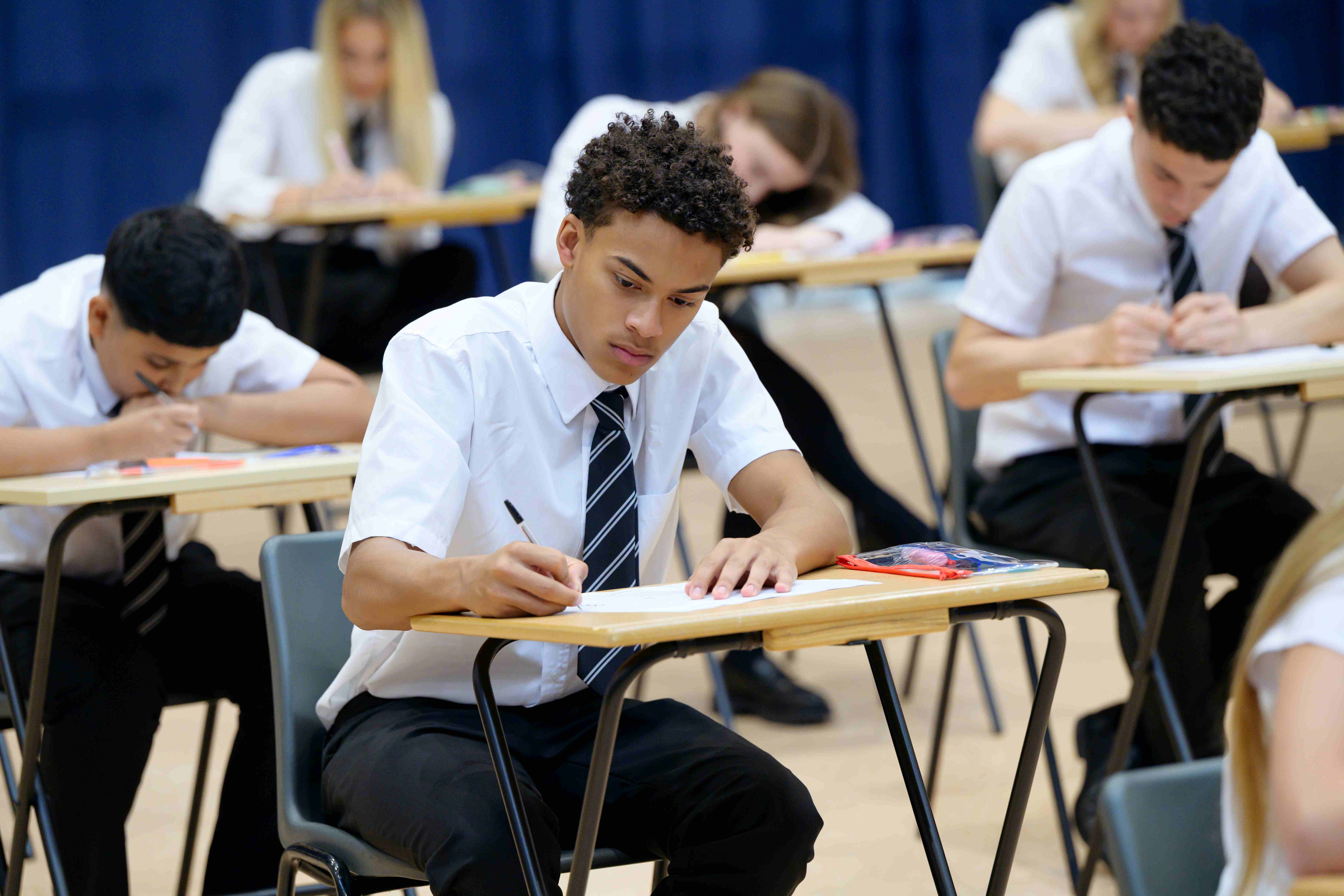
The facts speak for themselves: boys are behind girls at every stage in our education system – from reception year to university. Boys take fewer A levels, so 59,000 fewer grade C or above A levels were awarded than girls. In 2024, 44,000 fewer UK males aged 19 and under went to university than their female peers. Most pertinently we are excluding boys from school at record rates: 7,695 boys (3,190 girls) in England were excluded from school in 2023/24. The latest NEET figures (16-24 year olds) show that for the UK in April to June 2025: 224,000 young men were unemployed; 273,000 were economically inactive and young men make up 62% of young people who are unemployed.
It is important that there is a focus on the trouble some boys and young men are in. It is also important that we do something about it. Actors rightly get accolades but the subjects they play too often get ignored.

.png)
.jpg)